Arrival Friday, July 9 Departure Tuesday, July 13, 2027 Hôtel Royal, Évian-les-Bains
In a year when economic uncertainty has stretched the budgets of schools, universities, and foundations around the world, we have chosen to give our partners and delegations the time they need to join us fully. Moving to next summer lets us bring together the underwriting and the full roster of thirty-two delegations this forum was built for — so every student receives the complete experience they deserve.
The new dates carry a meaning of their own. The 1938 conference opened at the Hôtel Royal on July 6; in July 2027 our delegates will take their seats in the same rooms, in the same week, eighty-nine years on. We have also added a full day to the program, dedicated to leadership training and hands-on workshops.
Registrations and RSVPs already received carry over to the new dates. If you would like to help bring a delegation to the table, or have any questions about your plans, I would love to hear from you at elihubaver@gmail.com. See you in Évian next summer.
Hugh Baver
Convener & Project Director, Évian III
Delegations arrive at the Hôtel Royal. Opening ceremony, welcome dinner, and an introduction to the historical context of Évian.
A full day of educational seminars, guided dialogue, and reflective discussion on the lessons of the 1938 conference and the responsibilities of contemporary leadership.
A full day of leadership training and hands-on workshops. Delegates work in small groups with faculty on negotiation, public speaking, and drafting the document they will present together.
Morning tour of the town of Évian-les-Bains and a visit to the Évian water company. Evening: formal presentation, closing gala, and ceremonial farewell.
Delegates return to Geneva-Cointrin airport for onward travel to their originating destinations.
The historic Hôtel Royal in Évian-les-Bains, France. The exact location where global leaders gathered in 1938, providing an unparalleled atmosphere of consequence and reflection.
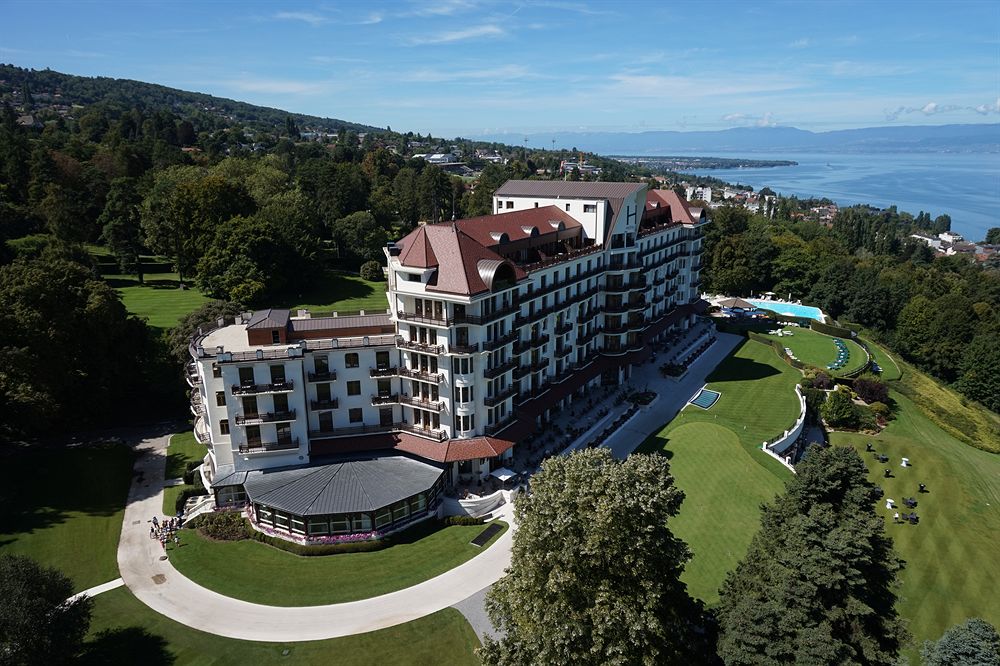 Hôtel Royal
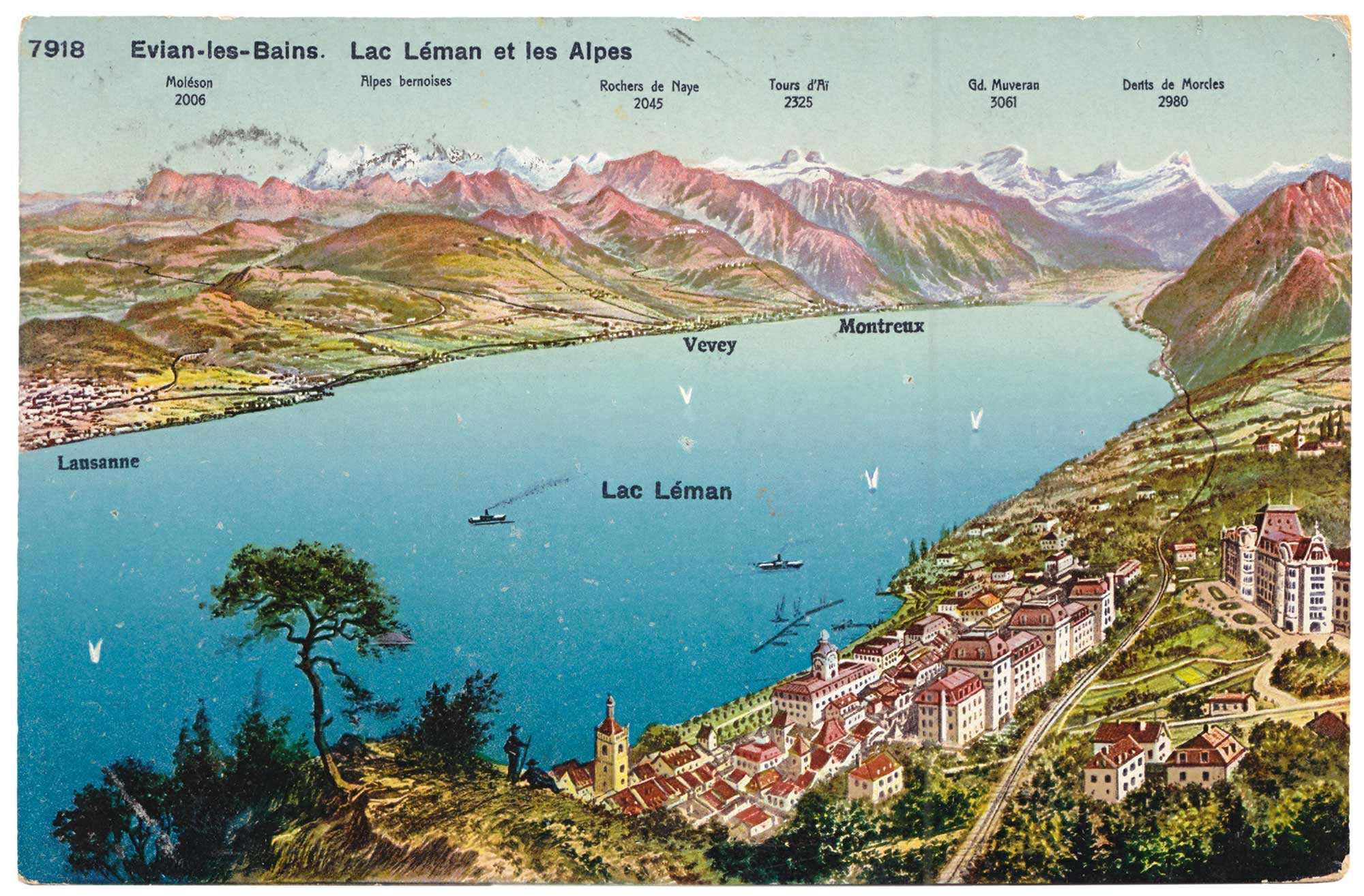 Évian-les-Bains, France
We're building the program around the Model UN method — students step into the roles of the 1938 delegates, research their assigned nation's position, and debate the refugee question as it was actually faced. The aim is to make history something you do, not just hear about.
The full curriculum is still taking shape, developed with input from our educators, but the approach is set: small working groups, primary sources, structured debate, and a closing session connecting 1938 to the refugee questions of today.
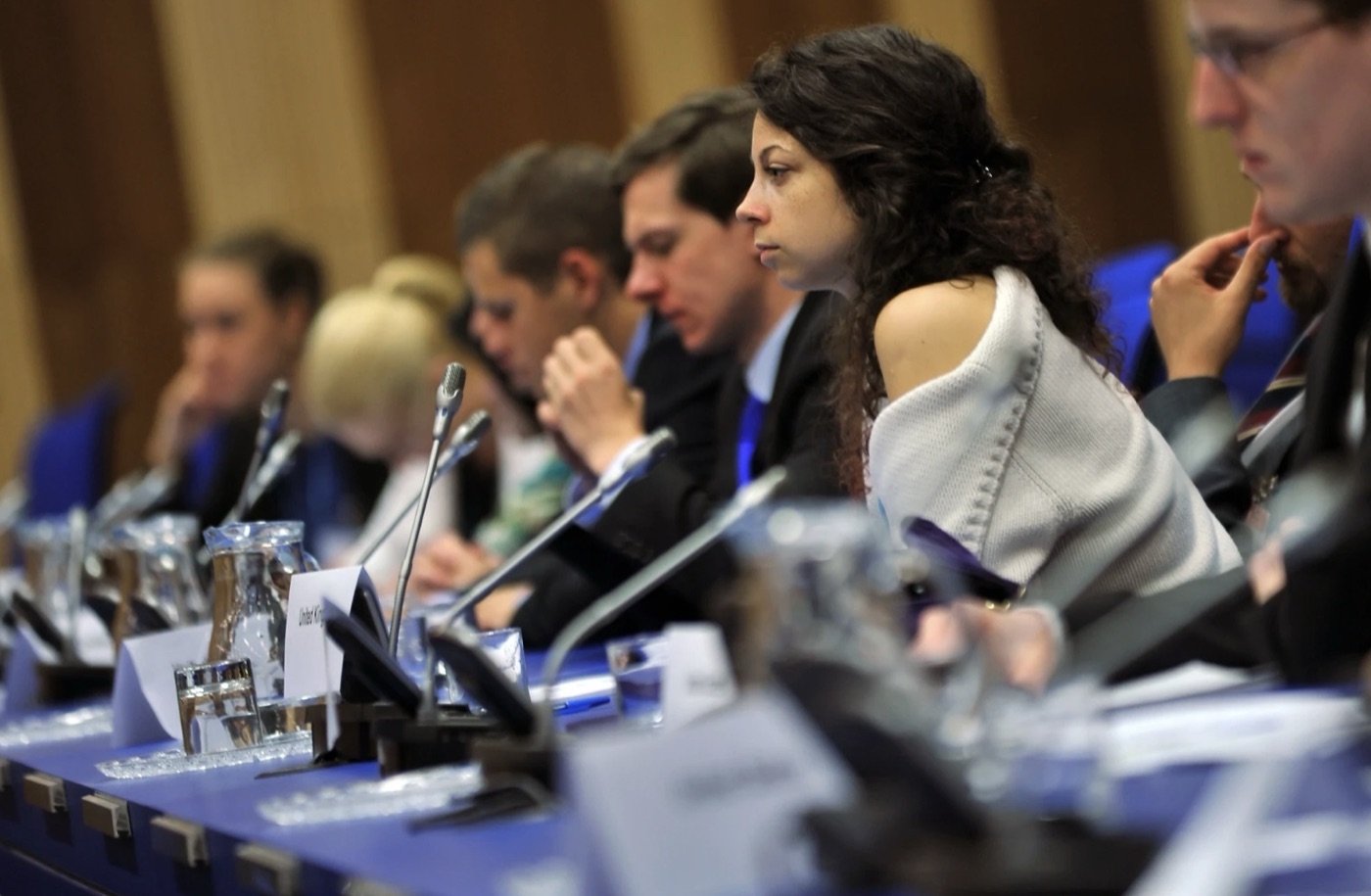
The curriculum is being finalized and will be shared with confirmed delegates ahead of the forum.
The Évian III Student Educational Leadership Forum brings thirty-two students to the hotel where the 1938 Évian Conference failed, and puts the same refugee question in front of them.
They spend five days on primary sources, structured debate, and the question of what a country owes people it did not create a crisis for. They leave with a document they wrote together.
Thirty-two nations met here in 1938. One of them said yes.
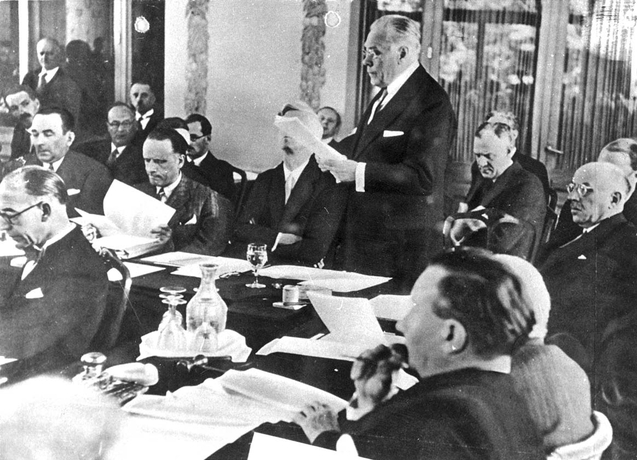
In July 1938, delegates from 32 nations gathered at the Hôtel Royal in Évian-les-Bains to address the crisis of Jewish refugees fleeing Nazi persecution. Over nine days they agreed to almost nothing. Only the Dominican Republic offered to take people in.
Évian III returns to the same address. Students work through what the delegates were told, what they said, and what it cost — then take the same questions apart themselves.
To rigorously analyze the events of the 1938 Évian Conference, understanding the geopolitical, social, and moral factors that led to global inaction.
To give student leaders practice in dissent — arguing an unpopular position, in public, against people who outrank them.
To draft the Évian III Student Accord — a collaborative commitment to human rights and global responsibility that delegates will bring back to their respective nations.
In 1938, thirty-two nations sent delegates here. In 2027, students from those same thirty-two nations take their seats and answer the question their predecessors dodged.
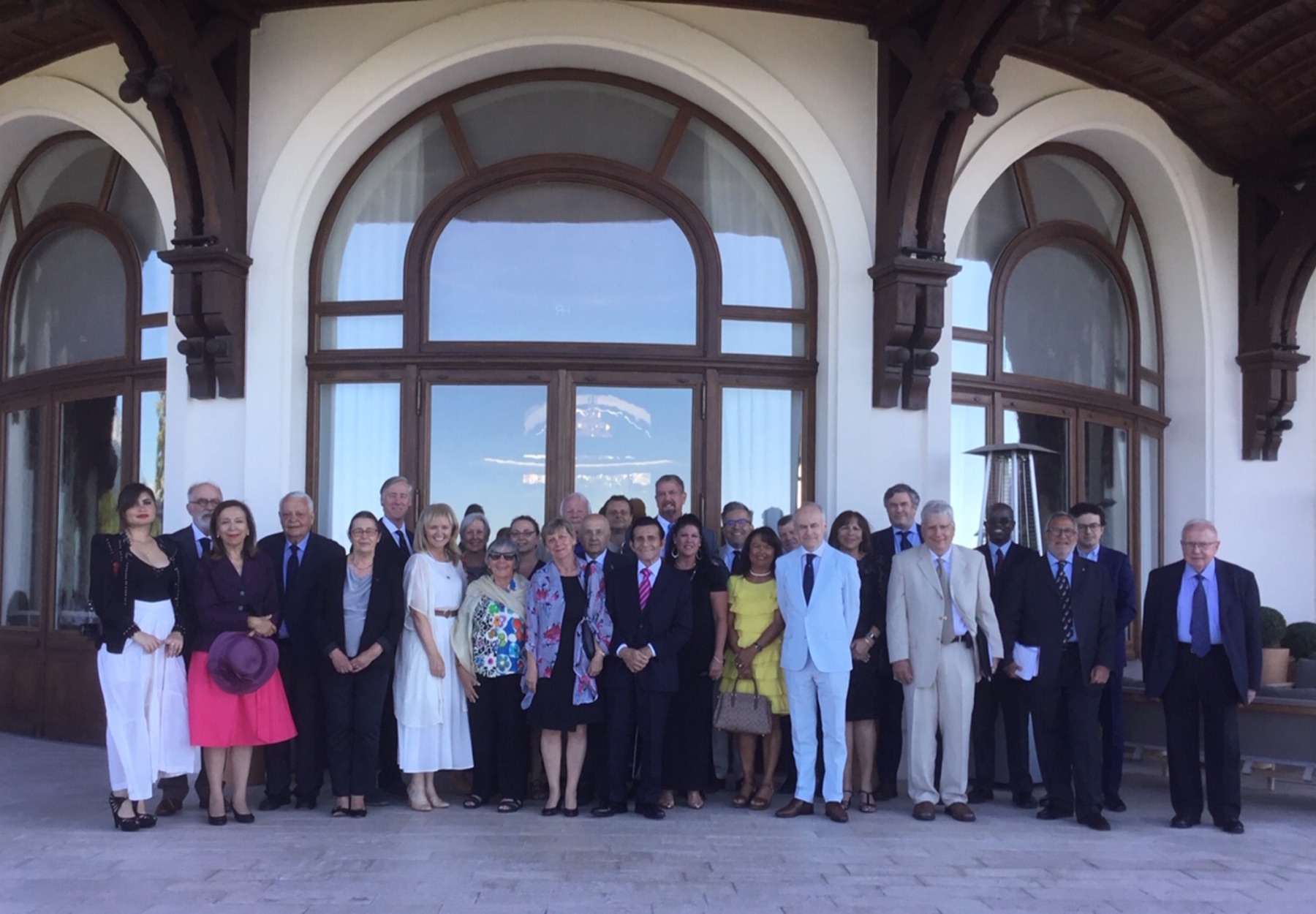
In July 2018, Hugh Baver convened Évian Revisited — an international educational symposium marking the 80th anniversary of the 1938 conference, held in the very rooms of the Hôtel Royal where the original delegates had met. The gathering brought together leading historians, French and international Jewish leaders, government officials, authors, and human rights experts under a single banner: Remembering the Past & Plotting a Course for the Future.
The symposium concluded with the unveiling of a permanent historic plaque at the Hôtel Royal — the first formal commemoration ever installed at the site, and the realization of years of archival work by Hugh and the Sosúa 75 team. It is still the only formal marker at the site.
Évian III is the next chapter. Where 2018 honored remembrance among scholars and statesmen, 2027 hands that work to the next generation. The forum carries the same dignity and the same hotel, scaled to a deliberate purpose: thirty-two students from the thirty-two original nations, five days of structured dialogue, and a body of work that returns home with them.
Évian Revisited (2018) was supported by a coalition of universities, foundations, and human-rights organizations. Évian III is being built on that network.
Évian III is currently inviting institutional partners for 2027. Begin a conversation →
A complete overview of the forum — its founding, its vision, the historical context of 1938, and the design of the 2027 program. Prepared for educators, institutions, and prospective partners.
Open the Slide DeckÉvian III runs entirely on support from people who think the next generation should learn this history where it happened. Every $2,000 sends one student delegate.
Recognition tied to a serious commemoration at the original 1938 site.
A newsworthy event in the anniversary week of the 1938 conference.
Time with the historians and educators leading the forum.
32 delegates head home to campuses worldwide and carry the work forward.
Four ways to give, from any amount to $25,000+.
Become a Partner